• Skip to primary navigation
  • Skip to main content
  • Skip to primary sidebar
  • Texas A&M Forest Service
  • Texas A&M Veterinary Medical Diagnostics Laboratory
  • Texas A&M AgriLife Extension Service
  • Texas A&M AgriLife Research
  • Texas A&M College of Agrculture and Life Sciences
Hunt County Master Gardeners
Hunt County Master GardenersTexas A&M AgriLife Extension Service
  • Menu
  • Home
  • About
    • A History of the Master Gardeners in Texas
    • Outdoor Learning Center
    • Master Gardeners Emeritus
      • Lamont Cunningham – Hunt County
      • Madeline Sullivan – Hunt County
  • The Heritage Garden
    • Bed A – Butterfly Bed
    • Bed B – Earth-Kind Bed
    • Bed C – Sustainable Plant Bed
    • Bed D – Herb Bed
    • Bed E – Vegetable Bed
    • Bed F – Animal Name Bed
    • Beds H & I – North & Northeast Perimeter Beds
    • Bed J – Shadeless Bed
    • Bed K – OLC
    • Bed L – Wildflower Bed
    • Bed M – Rose Bed
    • Heritage Garden Plant Database
  • Events
  • Links
    • Hunt County Extension Office
    • Texas AgriLife Extension Bookstore
    • Aggie Horticulture
    • Aggie Turf
    • Texas Master Gardener
    • Texas Master Gardener Association
    • Texas Master Gardener License Plates
  • Articles
  • Resources
    • Plants for East Texas
    • Vegetable Resources
    • Fruit & Nut Resources
    • Texas Plant Disease Diagnostic Lab
    • Soil, Water and Forage Testing Lab
    • Texas Superstar Plants
    • Earth-Kind Landscaping
    • Insects in the City
    • USDA Plant Hardiness Map
  • CEUs
    • Log My Hours
    • Texas Master Gardener Association Events
    • Master Gardener Advanced Training
    • Earthkind Online Classes
    • American Horticultural Society Events
    • Texas Botanical Gardens and Arboreta

Cleanup After the Fall Garden

December 7, 2011 by stephaniesuesansmith

Cleanup After the Fall Garden by Byron Chitwood

After the first killing frost and freeze, most of the fall gardening is over with. The exception might be some of cool hardy crops such as collards, cabbages, broccoli and chard. The rest will have frozen and is ready to be pulled to get ready for the coming spring crops.

Pull all the frozen vegetable plants and put them in the compost pile or container. For quicker and more thorough composting, run a lawnmower over the ones with stems such as green bean and okra plants. If you suspect that your tomato plants had a disease, these should be destroyed or placed in a garbage container destined for the landfill. Some tomato diseases remain dormant in the plants until the next year and might infect your spring crop. There are too many tomato plant diseases to elaborate on them in this article.

Clean all the sticks and stones from the surface of your garden. Then place a layer of leaves over the portion of the garden that does not have any surviving vegetables such as collards. Till the leaves under and rake the bed smooth. If we have a wet winter, most of the leaves will compost before the next planting season. Do this every year and your garden soil will become very mellow and have good “tilth” or be very crumbly and friable.

If you do not have a compost pile or container, just dig a trench in your garden about two feet wide and half a foot deep. Then place the plant material that you have pulled and recover it in the trench. This material will compost during the winter. Also, during the winter months, bury your kitchen waste such as all vegetable matter, fruit peels, and coffee grounds in your garden area. Weeds that pop up in flower beds should also be buried in the garden. You might want to ask your non-gardening neighbors to save their kitchen scraps for you. Then reward them in the spring with some fresh vegetables.

During the winter months, there are some weeds that germinate and start to grow in your garden area. Don’t let these get too far ahead of you. Keep them hoed and turned under, especially the winter grasses.

You might want to plant a cover crop to prevent erosion and add back some fertility and vegetation to your soil. However, this is a subject for another article that I hope to complete soon.
Filed Under: Gardening 101 Tagged With: Winter

Allergies and the Gardener

November 30, 2011 by stephaniesuesansmith

Allergies and the Gardener by PJ LaRue Smith.

How many gardeners have expressed this sad lament, “I love the outdoors, but it sure doesn’t love me back!”  Allergies have long been the bane of many a gardener, many of whom would like to spend more time in the garden, but when they do, suffer miserably with sinus congestion, watery eyes, and sneezes galore.

But now, the air is cooler, a little rain has fallen, and ragweed, (what little grew during this dry fall) has met an early demise.  A perfect time for most gardeners to prepare for next spring’s vegetable and flower gardens.  Unfortunately, for allergy sufferers who are particularly sensitive to cedar pollen, this time of year often proves worse than all of the others combined.

“Cedar fever” as some call it, is not actually caused by true cedars, but by one of two juniper species.  Juniperus ashei (commonly known as Mountain Cedar) is a drought tolerant small evergreen tree, native to northeastern Mexico and the south-central United States north to Missouri; however the largest stands are found in central Texas, particularly along the Edwards Plateau.

Juniperus virginiana (commonly known as Eastern Red-cedar or Red Cedar) is native to eastern North America, from southeastern Canada to the Gulf of Mexico, east of the Great Plains; and in Texas, where it is most prevalent in the post oak savannah area of the state.

Various locations in Hunt County have both of these species present, which makes the allergy season twice as long for those who are sensitive.  Mountain Cedar, the more potent allergen producer, sheds pollen from November until February; Eastern Red Cedar, no slouch on the allergen scale itself, produces pollen from late December thru March, and sometimes even into April.

General tips for getting through this time period follow:

Outdoor precautions: When driving, keep the car windows up and set the heat/AC on recirculate. Pay attention to pollen counts.  Peak pollen production is between 5 a.m. and 10 a.m., and pollen counts are highest on warm sunny days.  Windy days will drive pollen into eyes and deeper into sinuses.  If your eyes are particularly sensitive, wear large sunglasses or goggles.  A painter’s mask can be worn to keep the pollen from entering the mouth and nose.

Indoor precautions:  Keep doors and windows closed (even on nice days).  Run the AC when pollen counts are high.  Consider the use of a HEPA (high-efficiency particulate air) filter to limit pollen infiltration in to the AC system.  Dust regularly using a damp cloth, and vacuum carpets with a vacuum equiped with a HEPA filter.  Take a shower and change clothes after being outdoors for a long period of time. (This includes your spouse as well.  Even if they are not allergic, they will transfer pollen onto pillowcases, furniture, etc.)  Bathe indoor pets often.  (They go outside to do their “business” and pollen comes back in on their coats.)

For those whose allergies are particularly severe, recommendations include visiting your doctor in early fall to update any treatment plan; stocking up on prescription allergy medication; as well as eliminating male cedar trees in the yard and replacing with good hardwoods (oak, ash, elm, etc.)

Want to know more about pollens in our area?  Visit www.pollenlibrary.com.  One source for local pollen counts is www.pollen.com.  Dallas-based news station’s websites provide pollen information as well.  Stay informed and be sure to follow your doctors orders for a more enjoyable winter season!

Filed Under: Gardening 101 Tagged With: Gardening and Allergies,

Compost

October 31, 2011 by stephaniesuesansmith

Compost by Thomas Clark.

If you take a moment to look up the term compost in a dictionary, you will likely find reference to a mixture of decaying organic matter, such as leaves
and manure.  At least that is what I read when I examined the American Heritage Dictionary.

If you have a yard with a vegetable garden or flower beds of any size then learning to compost effectively is a worthwhile activity.  I say
effectively because we are not talking about rocket science here.  This is basically a process of decay that is going on all the time with or without us
being involved.

Only when we speak of a compost pile, we are striving to have efficient decay that does not smell offensive, look unsightly, or pose any
health hazards. It is a win – win situation.  We can dispose of waste that is often sent to the landfill and reuse it as high quality amendment material for
our flower beds, garden, or even yard.  For example, a person can pile lawn clippings, leaves, and kitchen scraps in a pile and let it rot down.  The final composted product, called humus will be about 20 percent in size of the original pile and when used in planting bed will help retain moisture and contribute nutrients and microbial activity.  This will improve productivity.

There are some basic considerations to know.  It is all about ingredients and construction.  Brown stuff and green stuff and water and air make compost.
Brown stuff is generally high carbon content: things like straw, fine wood chips, dry leaves, and dry brown grass.  Green stuff is nitrogen rich material:
mostly fruit and vegetable kitchen scraps and fresh cut grass.  Air is important to support aerobic microbial activity in the compost pile.  Microbes are your little
workers that will process and rot the pile, similar to what occurs in the forest to leaves and fallen limbs.

While livestock manure is a desirable source of nitrogen, to reduce possible health hazards, you should not compost dog and cat
feces or meat products.  Egg shells are ok if you are not having problems attracting animals.  Some moisture is important, but too much will reduce the
amount of air in the pile and it may become anaerobic, lacking sufficient oxygen.  This may result in unfavorable odors.

If the pile shape does not shed enough water a tarp or bin may be used.  If it gets too dry and rotting slows down, a garden hose can fix that.  The different materials will rot faster if
mixed somewhat, so some folks will turn the pile periodically.  A pile on the ground is fine, or you can construct a bin or purchase a commercial bin.
If you have never composted and this all seems mysterious and confusing, do not worry.  The intent of this article is to drive home the concept that composting is easy.  Anyone can do it.  It is just a balancing act of adjusting the mixture of materials with air and moisture.  An excellent source for learning a great deal more about this is the Texas A&M Agrilife Extension website.

Filed Under: Gardening 101 Tagged With: Composting

Growing House Plants

October 22, 2011 by stephaniesuesansmith

Growing House Plants by Marguerite Callahan.

House plants add a touch of beauty to our dwelling places and surely help bring the outside world into our home. People who think they cannot grow houseplants simply have to select the right plant type for their home’s amount of sunlight and the level of care that they are able to provide. House plants have many uses. Plants can be used to add color, accent, and vitality to your home and herbs can be used for both aesthetic purposes as well as cooking. Herbs such as rosemary, thyme, oregano, parsley, chives, and mint are great plants to have in your home. Listed below are some easy house plants to grow. Be aware that some of these plants are toxic.

Pothos (Scindapsus aureus also called Epipremnum aureum) – This hardy trailing vine is sometimes listed as Golden Pothos due to the yellow variegation in their heart-shaped leaves. These trailing vines can be placed in low light conditions and do not have to be near a window at all. Pothos are forgiving if you forget to water regularly, but if you forget too many times you will notice significant yellowing and loss of leaves. You will find that the more you trim the plant the bushier it will become. The stems you remove from the plant can be readily rooted in water and you will soon have many more plants. Pothos is a very popular vine that contains calcium oxalates, which can cause burning, itching, vomiting and difficulty swallowing if any part of the plant is ingested.

Aloe Vera (Aloe barbadensis) – Like most succulent plants, they have limited water requirements. Allow soil to dry completely between watering. Remove new shoots when they are 3 to 4 inches high and replant in their own pots. This plant prefers sun to partial shade. It can cause contact dermatitis and may cause vomiting if ingested.

Spider plant (Chlorophytum comosum) – Many homes feature Spider plants hanging near their windows. A little water from time to time, a little sun, and spider plants almost always thrive. They’re also easy to propagate. Baby spider plants just grow right on stems off the adult houseplant, and can be picked and potted.

Sansevieria (Snake Plant or Mother-in-Law’s Tongue) – This tough plant is the ultimate drought survivor because of the long sword-like leaves. They are slow growers but with occasional watering (when the soil is extremely dry) and a bright room they will be with you for a long time. Remember that the leaves and plant saps can be poisonous to people and pets.

Select only those plants which appear to be insect and disease free. Be sure to check not only the top of the plants but also the undersides of the foliage. Select plants that look shapely and well-covered with leaves.  Remember that it is easier to purchase a plant which requires the same environmental conditions your residence has to offer than to alter the environment of your home to suit the plants.

Filed Under: Gardening 101 Tagged With: Houseplants,

Plant Stress

August 2, 2011 by stephaniesuesansmith

Plant Stress by PJ LaRue Smith

Temperatures in the 100 plus range coupled with no rainfall puts extreme stress on plants in the garden.  An avid gardener often will go to great lengths to save the plants they’ve lovingly cared for over the years.  While such measures can keep treasured plants alive, the gardener, focusing on their plants, will often neglect their own physical needs while outdoors.

Basically our needs are the same as those of the plants we tend – water, minerals, sunlight, and a preferred temperature range.  What does a conscientious gardener do when a plant catches their eye at the garden center?  Look for the tag and upon locating it, flip it over, and read what the plant requires in order to grow into a beautiful garden specimen.  (Too bad we, ourselves, don’t come with such tags!)

Water, for example, is a primary part of both plant and animal.  During the course of daily living plants transpire, and we perspire.  Add excessive heat and the moisture loss is greater.  Fail to replenish the moisture in a plant and it will first wilt, then die.  Fail to drink water at regular intervals and we will do the same.  Helpful Hint:  Freeze a water bottle and carry it outside with you.  Even better, get a drink holder that clips onto your belt loop – no having to walk somewhere to get your drink, plus, the added bonus of having coolness next to your body.  It is important to note that many medications, such as diuretics (which affect the fluid balance in the body) and those for Parkinson’s disease (which inhibit perspiration) can impact a person’s ability to tolerate extreme heat.  Use good judgment, don’t go outside during the hottest part of the day (10 AM – 5 PM here lately) and at the first sign of light-headedness, dizziness, or rapid heart rate, get out of the heat or into the shade.

Minerals are necessary for plants to grow and bear fruit.  In us, minerals such as salt, potassium, and calcium contribute to the maintenance of proper heart rhythm and blood pressure.  These essential minerals are lost through perspiration and urination.  For those on diuretics, loss of these minerals are even more pronounced and increase the chances of succumbing to a heat related illness.  Helpful Hint:  Freeze drinks that contain minerals (Gatorade® for example) and alternate between drinking them and water.

Sunlight for plants is a critical component of photosynthesis, and for us, it aids in the absorption of vitamin D.  But not all plants can tolerate full sun – if so planted, the shade loving plant’s leaves will curl up and die.  The fair-skinned amongst us will turn red and blister (which, for reference, also inhibits perspiration).  Even the most sun-loving of plants will appreciate a little respite from the blazing afternoon sun, just as those of us who turn a beautiful bronze will benefit from the use of a good sunscreen in the prevention of skin cancer.  Helpful Hints:  Wear a light colored hat (keeps your head cooler) and sunglasses when outdoors.  Apply a “sweat-proof” sunscreen on all exposed parts of the body and reapply as needed.

Temperature, as it relates to plants, tends to only address the lowest tolerable temperature.  However, extremely high temperatures can so stress a particular plant’s ability to recover from the moisture loss or intense heat that it dies.  Even plants that have held up well over the years through all kinds of weather conditions may succumb this year.  Just because heat has never been a problem for you in the past does not exclude you from its affects today or in the future.  If you have ever experienced heat exhaustion, you will be more prone to heat related illness.  If you have ever, as has this gardener, experienced heat stroke, you KNOW that “beating-the-heat” means taking care of yourself just as well as you take care of your plants!

Filed Under: Gardening 101 Tagged With: Plant Stress,

Cover Crops

July 20, 2011 by stephaniesuesansmith

Cover Crops by Melissa Oakes.

When our vegetable gardens are finished for the season it’s easy to think about just letting our garden sit until it’s time for the next planting season. We’re tired and ready to walk away and forget that it’s during that time when its most important to invest in our soil health. Planting a cover crop is a great way to feed your soil, prevent topsoil loss, reduce compaction and suppress perennial and annual weed growth.

Building healthy soil should always be the aim of good gardening practices. It’s the key to growing plants that are strong and yield more. Since Texas soils contain less than 1 percent organic matter, a long term plan is needed to maintain healthy soil. Our high soil temperatures can speed up the decomposition process, thus making it a challenge to keep the levels high enough. Cover crops are a great way to do this and are known as “green manure” which add organic matter back into the soil, aerate it and help with moisture control. A few examples for cover crops are crimson clover and vetch in winter and cowpea and sorghum in the summer for nitrogen fixing will give the best benefit to your soil and encourage microbe growth. Cover crops used in this were planted for the purpose of plowing into the soil while still green and prior to harvest maturity. This is especially helpful in vegetable garden production.

Topsoil loss can be a problem if left unchecked. Heavy rains wash open unprotected soil into our storm drains and ditches. Cover crops help to hold the soil in place and also decrease the impact that precipitation can have on it. We lose minerals when they are leached out through heavy rain. Cover crops can also be planted during active gardening season between plants as a live mulch to protect any exposed soil.

Soil compaction is another issue that can be a major hindrance to plant growth. Low amounts of organic matter can be the problem. Cover crops not only keep the soil broken up by their root growth, but also when they are tilled into the soil prior to the next season’s planting they add tilth to it. The aerated soil is especially helpful in allowing seeds to better germinate and produce a good root system.

Weed growth is always a problem no matter what season it is here. Weeds rob plants of nitrogen, water and other nutrients. The primary purpose of non-nitrogen producing cover crops like wheat and rye for winter and buckwheat and Sudan grass for summer is to take up space and block out light to prevent weed establishment. They provide a more sustainable way to manage weed problems, reducing herbicide dependence and costs associated with it.

For more information on cover crops and soil management contact Hunt County Texas A&M AgriLife Extension at 903-455-9885 for details about publications that are available or go to http://aggie-horticulture.tamu.edu/ for more information.

Filed Under: Gardening 101 Tagged With: Cover Crops,

Square Foot Gardening

April 21, 2011 by stephaniesuesansmith

Square Foot Gardening by Pat Abramson.

I’ve been hearing a lot of reasons why friends think their garden will be more than they can handle.  “Without a tiller, I can’t prepare a bed.” “With my arthritis, I don’t think I can do all that bending.”  “It’s more than I can take on right now.”  These folks need to discover the “Square Foot Gardening” way!

No tilling is necessary, because you don’t use any soil you have!  Instead, you create a bed ON TOP OF your own soil!  You only plant what you want to eat, or can, or give away.  And, if necessary, you can create your garden plot (4’ x 4’, or smaller) on a table, with holes in the bottom, so there’s no bending or kneeling.

Mel Bartholomew’s “Square Foot Gardening” book has sold more copies in the last 25 years than any other garden book.  An engineer/efficiency expert, Mel wondered why everyone gardened in long rows that created lots of weeds, why they planted more than they could ever eat, and why they thinned or threw away 90% of what they had planted.  Reason:  “Because that’s the way we’ve always done it.”

Mel’s only tool need is a trowel.   “Mel’s soil mix” is equal parts of compost, peat moss, and vermiculite.  In our area, NK Lawn & Garden Seeding Mix will work better.

Locate your garden “box” plot close to the house.  Make it 4’ x 4’ on each side.  Each box will be 6” deep.  Space each box 3’ apart.  Wet 5 – 6 layers of newspaper on the bottom of your box, then fill it with the modified Mel’s mix described above

Place on top of each box frame a permanent “grid” that divides the box into one-foot squares.  This grid is what makes the whole system work so well.  Venetian blinds work great.  Secure them to the sides & bolt them where they cross.  You now have 16 squares for up to 16 different vegetables.  In each 1-ft. square you can plant the following:  16 carrots, 9 spinach, 9 beets, 4 lettuce, 1 cabbage, 1 broccoli, 1 pepper, 1 tomato, 2 cucumbers, 8 pole beans.  On one side of your box you will trellis plants like tomatoes vertically.

There won’t be room for weeds.  Your plot is so small, watering is now manageable.  Each time you harvest a plant, you’ll add a cup of compost and plant something new.

Bartholomew has begun a Foundation to help teachers, gardeners and missionaries carry Square Foot Gardening information to countries where families can learn to grow what they eat.  Islands like Bermuda import all their food.  The Government is working with Bartholomew to help teach residents how to go back to growing more of their own food.  A manageable, square-foot garden seemed so ideal for schools that Utah decided to install one in each elementary school in the state!

“Square Foot Gardening” is available at bookstores.  More information and products are available at www.squarefootgardening.com.

Filed Under: Gardening 101, Square Foot Gardening

Grow Something Green For St. Patrick’s Day

March 15, 2011 by stephaniesuesansmith

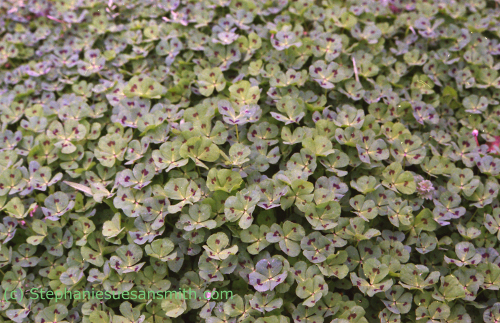
Grow Something Green For St. Patrick’s Day

Celebrate St. Patrick’s Day by growing something green.  These shamrocks, a type of oxalis, were in the grass between the formal beds and the shade garden last year.

Green Shamrocks, or Oxalis

Filed Under: Gardening 101 Tagged With: Oxalis,, Shamrocks,, St. Patrick's Day,

  • « Go to Previous Page
  • Page 1
  • Interim pages omitted …
  • Page 4
  • Page 5
  • Page 6
Find Us on Facebook logo

Articles by Topic:

  • Composting
  • Earth-Kind
  • Entomology
  • Events
  • Flowers
  • Fruits and Nuts
  • Gardening 101
  • Herbs
  • History
  • Keyhole Gardens
  • Ornamentals
  • Plant Diseases
  • Recipes
  • Roses
  • Seeds
  • Square Foot Gardening
  • Trees
  • Turf
  • Vegetables
  • Water Conservation
  • Wildlife
  • Winter

Article Key Words

African Violets Asparagus Bag Worms, Bees Birds, Bluebonnets, Brown Patch, Butterflies, Composting Dragonflies eGardening with the Master Gardeners, Fall Tomatoes, Fire Ants, Fruit Trees Garlic, Gifts, Grapes, Grasshoppers, Greenhouses, Keyhole Gardens Late Fall Vegetables, Late Spring Gardening, Leeks Notable Texas Gardens, Onions, Poison Ivy, Poisonous Plants, Potatoes Propagation Pruning Trees, Rainwater Harvesting, Raised Beds Rose Hips Spider Mites, Spring Vegetable Gardening Squash Bugs, Summer Trees & Shrubs, Turf Grass, Valentines, Vegetables Watering Water Wise Gardening, Wildflowers, Winter
Texas A&M AgriLife Extension Service
Texas A&M University System Member
  • Compact with Texans
  • Privacy and Security
  • Accessibility Policy
  • State Link Policy
  • Statewide Search
  • Veterans Benefits
  • Military Families
  • Risk, Fraud & Misconduct Hotline
  • Texas Homeland Security
  • Texas Veterans Portal
  • Equal Opportunity
  • Open Records/Public Information